Frequency injection for camouflaged objects
Why the Laplacian pyramid is a surprisingly good prior for detecting things that do not want to be seen.
Camouflage makes segmentation difficult: the object shares the texture and appearance of its background. The question is not just what an image contains, but where one thing ends and another begins.
A prior for the details
A Laplacian pyramid separates image detail across scales. LaFINet brings those details into a learned representation alongside frequency features, giving the model additional cues for boundaries that are easy to miss.
01 — The intuition
Take it apart. Add the detail back.
Blur an image, then halve its width and height. Repeat: that is a Gaussian pyramid. Expand each smaller image back to the previous size and subtract it from that previous image. The differences, plus the smallest Gaussian image, form a Laplacian pyramid.
Building the image pyramid…
Reconstruction: Gₗ = Expand(Gₗ₊₁) + Lₗ. Keep the coarse base and every residual to rebuild the original image.
Classical demo computed in your browser from a grayscale version of the paper’s input image. Uses a 5-tap Gaussian filter and Gaussian expansion; this is not a LaFINet feature map. Read about image pyramids ↗
02 — Inside LaFINet
From image details to a prediction
The pyramid supplies a useful starting point, not the answer. LaFINet injects multiscale Laplacian cues into an EfficientNet-B0 encoder, then combines them with learned frequency and semantic features.
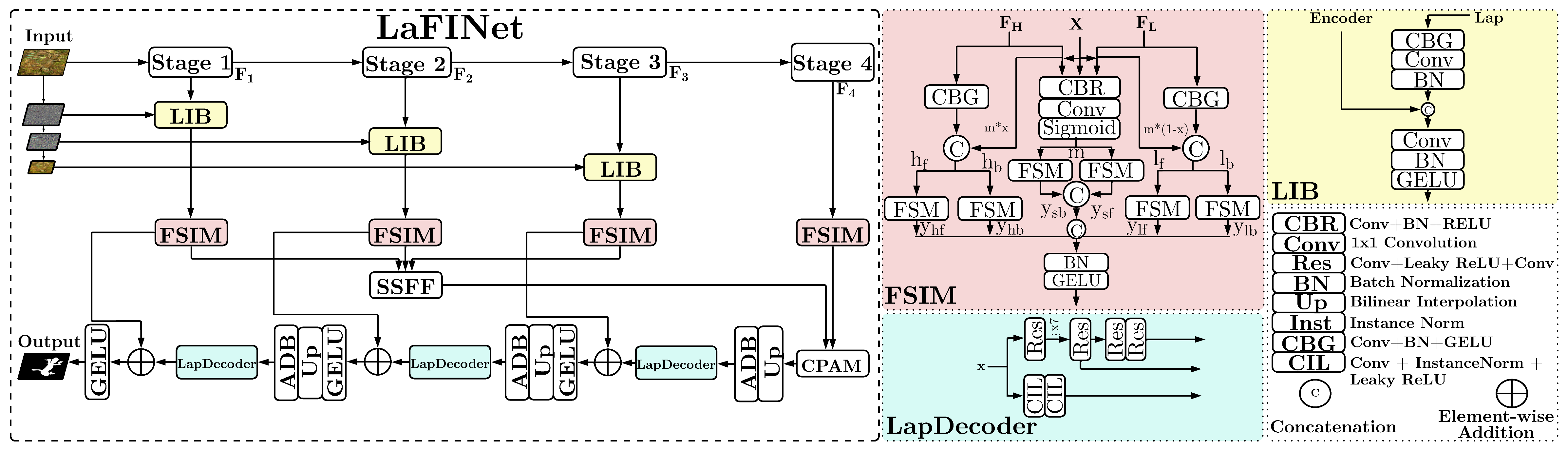
01 / InjectLaplacian Injection Blocks (LIBs) fuse pyramid details with encoder features at matching scales.
02 / ModulateFSIM combines frequency cues with foreground–background modulation.
03 / DecodeLapDecoders, scaled sequence fusion (SSFF), and channel/position attention (CPAM) bring the information together.
LaFINet · AAAI 2026
Finding what blends in.
Camouflaged objects can look like their surroundings. LaFINet combines Laplacian and frequency features to identify their shapes and boundaries.
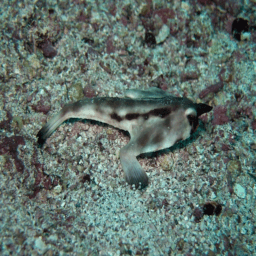
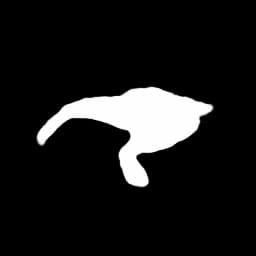
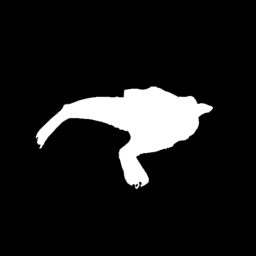
Drag the divider or move the slider. White marks the object; black marks the background.
Images, ground truth, and model outputs reproduced from Figure 2 of the published paper.
What to look for
Compare the outline and small gaps in the reference mask with the prediction. Where does the shape agree, and where does it lose detail? These four published examples are a qualitative view of the model, rather than a measure of its performance across a full dataset.
04 — The numbers
Published benchmark results
| Method | Params | Sα ↑ | Edφ ↑ | Fwβ ↑ |
|---|---|---|---|---|
| SINetV2 | 24.9M | 0.888 | 0.930 | 0.816 |
| TinyCOD | 4.72M | 0.887 | 0.931 | 0.814 |
| FINet | 3.74M | 0.883 | 0.928 | 0.808 |
| LaFINet | 4.48M | 0.892 | 0.940 | 0.829 |
Scores from Table 1; parameter counts from the accompanying results text. View the published results ↗
Sα · Structure
Agreement in object and region structure.
Eφd · Adaptive alignment
Alignment of the prediction and reference mask at an adaptive threshold.
Fβw · Weighted F-measure
A spatially weighted balance of precision and recall.
LaFINet leads these baselines on all three CHAMELEON scores. On NC4K, its E and weighted F scores are higher, while its structure score is slightly below FINet and SINetV2.